
How Arrest Warrants Work in Montmorency County
An arrest warrant is process, and it starts a criminal case by authorizing custody. In Montmorency County that authority lives with the 88th District Court. The court handles misdemeanor and felony arraignments, sets bail, and states plainly on its criminal page that it issues both arrest and search warrants. Under MCL 764.1, a judge or a district court magistrate may issue this process for a person charged with a felony, a misdemeanor, or an ordinance violation. The standard is probable cause. That is a threshold, not a verdict. A complaint or affidavit lays out the facts, a magistrate or judge reviews them, and a signed order follows. Once a felony is bound over for trial, the file moves to the 26th Circuit Court, though the arrest process itself began in district court.
Montmorency Arrest Warrant Issuance
The magistrate's office is the gate for Montmorency County. It reviews the complaint, weighs whether probable cause exists, issues the arrest or search warrant, and sets the interim bail the warrant can carry. The same counter also accepts bonds, which is why a warrant question and a bond question often end at the same window. For a reader, that makes the district court the first call, whether the case is a misdemeanor, a traffic matter, or a felony waiting on bind over. The deputy clerk who handles criminal and traffic files can describe what the register shows. Clerks cannot give legal advice.
Arrest Warrants: What They Contain
Michigan court rules set the required contents. The warrant must identify the accused, state the offense charged, command that the person be brought before a judicial officer, and carry the court's signature. No Montmorency warrant-number format is published in Michigan, so treat any number as a case identifier for that court alone.
| Complaint or case number | The court file identifier, for example 2024-CR-01234 |
|---|---|
| Warrant identifier | The number for the order itself when the court assigns one |
| Named subject | The name or identifying description required by the rule |
| Offense charged | The charge and its classification |
| Issuing officer and court | The judge or magistrate who signed it |
| Interim bail | A release amount the warrant may specify before arraignment |
Montmorency Warrant Rules in MCR 6.102
Michigan Court Rule 6.102 spells out both the contents of a warrant and the alternatives to one. It also says when a court may choose an arrest warrant over a summons: assaultive or domestic-violence allegations, a reason to think the person will not appear, a public-safety risk, or a prosecutor's request. Interim bail matters here, because a Montmorency County warrant can let a person post a set amount before arraignment. Rule 6.104 then requires arraignment without unnecessary delay, so the paperwork moves fast once custody begins.
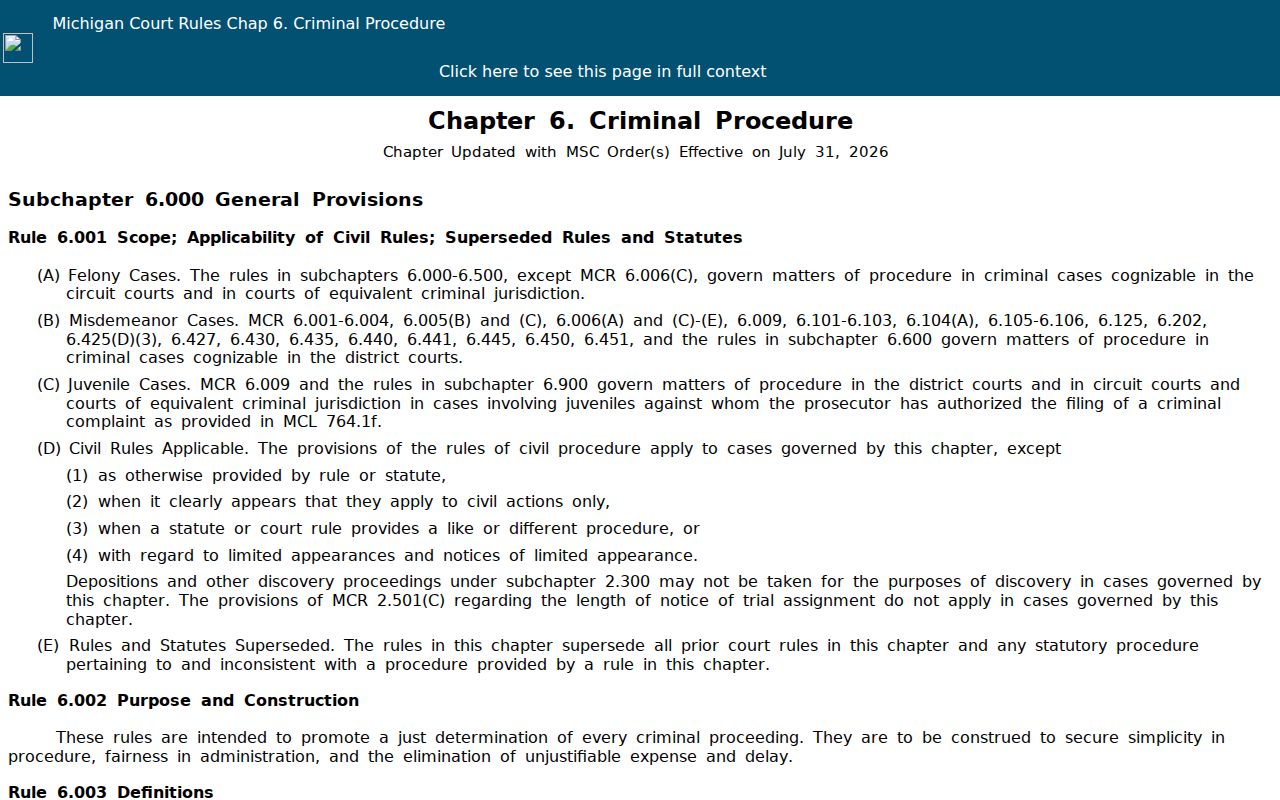
The rule text remains the clearest public account of what a Montmorency County warrant carries and who may execute it.
How Warrants Get Served in Montmorency County
Only authorized peace officers serve warrants. In Montmorency County the sheriff's office is the county's main law-enforcement channel, and the county directory routes civil paper service through the sheriff's department as well. State police and other officers with authority can also execute process. The directory lists no city marshal or municipal police warrant desk. Service can happen wherever an officer lawfully encounters the person, whether that is a traffic stop, a home visit, or the courthouse itself. After an arrest come booking and arraignment. The warrant then returns to the court with a report.
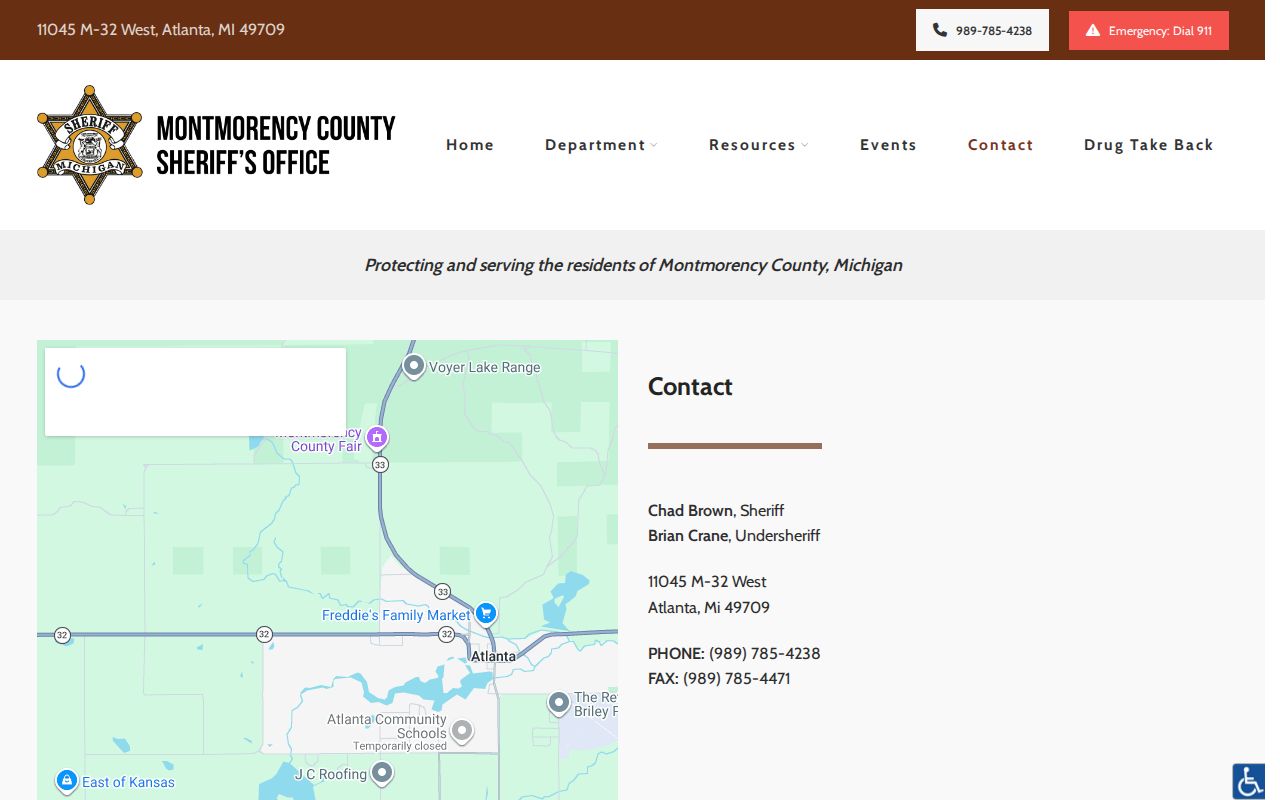
The sheriff's contact page splits the administrative line from jail and dispatch numbers, so a Montmorency County caller reaches the right desk the first time.
From Montmorency Warrant to Bind Over
A felony case in Montmorency County moves through a short sequence. Each stage belongs to a different office.
Warrant flow: Complaint and affidavit › probable-cause review by the magistrate › arrest warrant issued and served › arraignment and bond › preliminary examination › bind over to the 26th Circuit Court for trial.
Misdemeanor cases stop earlier. They stay in district court. At the bind-over step the records contact changes too: the county clerk keeps the circuit file, while the district clerk kept the earlier one.
Arrest Warrants, Summonses, and Bench Warrants
Three instruments can bring a person before a court, and each carries different consequences. A summons is the gentler option. A bench warrant grows from a case that already exists, while an arrest warrant starts the case in Montmorency County.
| Feature | Arrest Warrant | Summons | Bench Warrant |
|---|---|---|---|
| What it orders | Custody and a court appearance | An appearance without an arrest command | Custody in an existing case |
| When it is used | After a complaint and probable cause | When the court expects voluntary appearance | After a missed appearance or noncompliance |
| Who issues it | A judge or magistrate | The court | The judge in the case |
| Typical first step | Surrender arrangements with counsel | Appear on the date shown | Call the issuing court about recall |
The rule favors a summons unless the circumstances in MCR 6.102 justify an arrest warrant. That choice is a Montmorency County court decision, not a charging preference.
Federal Warrants and Montmorency County
Montmorency County sits in the Eastern District of Michigan, and its federal criminal matters are held in Bay City. A federal warrant never shows up in county court tools, and a county search cannot clear one. Federal dockets are public through PACER for registered users, with a per-page charge and a quarterly waiver when charges stay low. A docket can show a case exists without showing a public warrant document, and sealed filings stay sealed.
The U.S. Marshals also publish a district courthouse page and a fugitive tip line. That is a reporting channel for Montmorency County readers, not a status check.
Handling an Arrest Warrant in Your Name
Nobody should sit on an active arrest warrant and hope it fades. Call an attorney first. Then confirm the case details with the Montmorency County court that issued the order. A lawyer can read what the warrant actually says, raise the option of appearing voluntarily, walk you through the bond choices, and set up a surrender that happens on your schedule instead of at a traffic stop. Michigan Court Rule 6.105 spells out what a voluntary presentation earns you. If a judicial officer is available, arraignment comes within two hours. Otherwise the warrant gets recalled and a new appearance date is set. Either way the Montmorency County court still controls release and bond, so treat the rule as a procedure, not a promise.
Important: Call the court and the sheriff before traveling to surrender, because Montmorency inmates are housed at the Alpena County Correctional Facility.
Bond and recall steps for a Montmorency County warrant are summarized on the county warrant records home page.
Sealed Montmorency Warrant Files
A Montmorency County public case search is a filtered view, not the full file. Sealed orders, suppressed records, juvenile and child-protective files, and several other categories never appear in it. A case can even be public while its warrant paperwork stays restricted. New warrants also lag the public interface, and a recall takes time to propagate. Results are a starting point: they tell you which court to call, nothing more.
Note: A clean search result is never a clearance, so confirm arrest warrant status with the clerk who keeps that case file.